
Global Energy & Strategic Industrial (G-ESI)
New Network Rules Reshape Export Compliance
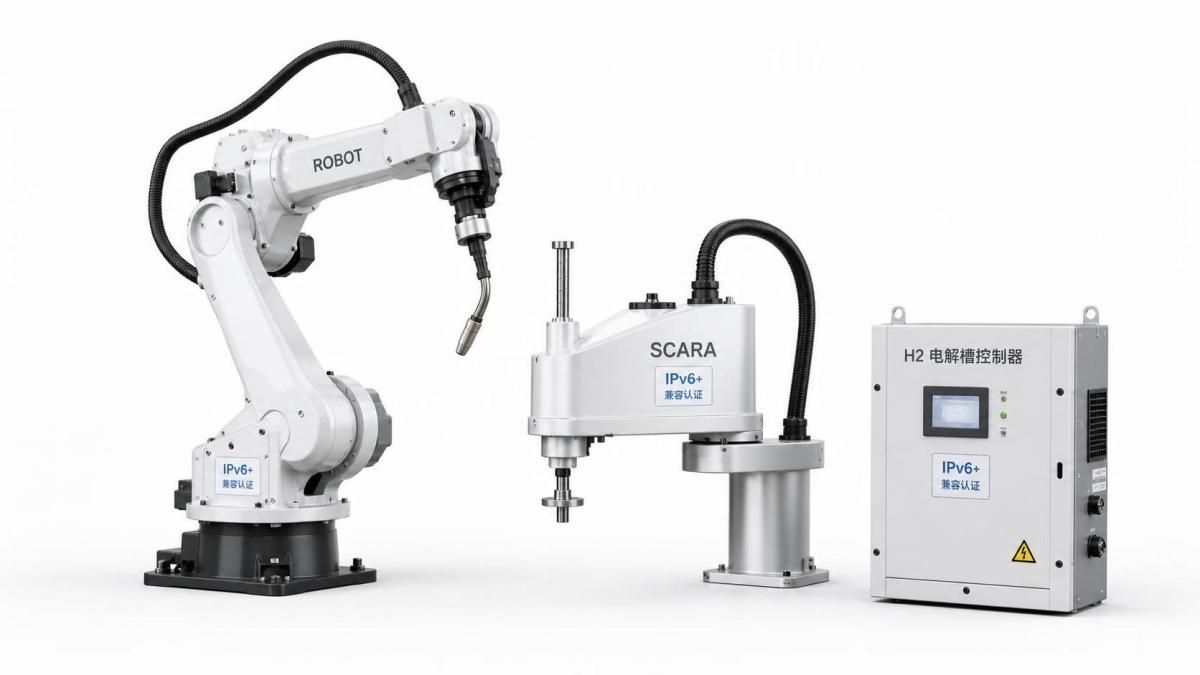
On August 13, 2026, four Chinese government departments jointly issued guidance that brings IPv6, satellite internet, and agentic interconnection networks into the governance framework for internet basic resources. The same document also states that industrial intelligent terminals, including welding robots, SCARA robots, and H2 electrolyzer controllers, must pass IPv6+ full-stack compatibility certification and a cross-border data interaction security assessment. For exporters of automation and hydrogen equipment, this is worth close attention because it connects network compliance more directly with export access, type approval, and delivery preparation for overseas markets.
What the guidance explicitly changes
The confirmed facts are limited but material. The guidance was jointly released on August 13, 2026 by four Chinese departments led by the Ministry of Industry and Information Technology. It is titled guidance on promoting the high-quality development of internet basic resources. In that framework, IPv6, satellite internet, and agentic interconnection networks are included within the governance scope of internet basic resources for the first time. The document also makes IPv6+ full-stack compatibility certification and cross-border data interaction security assessment a stated requirement for industrial intelligent terminals. The examples provided include welding robots, SCARA robots, and H2 electrolyzer controllers. According to the provided summary, this directly affects export market access and type certification routes for automation and hydrogen equipment sold into the EU, the Middle East, and Southeast Asia.
Where the operational pressure is likely to appear first
Exporting equipment makers will face a broader pre-shipment checklist
From an industry perspective, manufacturers shipping industrial robots or hydrogen-related control equipment may be affected because network capability and data security are now tied more visibly to export readiness. The impact is likely to show up in product configuration review, technical documentation, conformity preparation, and discussions with overseas buyers on whether a device is ready for local acceptance or type approval procedures. What deserves closer attention is whether existing export files, product declarations, and technical submissions adequately reflect IPv6+ compatibility and cross-border data handling arrangements.
Certification and testing participants may see earlier involvement in projects
Analysis shows that certification-related companies and testing service providers could be pulled forward in the delivery cycle. If IPv6+ full-stack compatibility certification and cross-border data interaction security assessment become practical prerequisites for market entry or customer acceptance, exporters may need those reviews earlier than before. The immediate pressure point is not only the final certificate itself, but also the supporting technical materials, interface descriptions, and evidence package needed to support the compliance path.
Procurement and project buyers may tighten specification language
Buyers, EPC-related procurement teams, and channel partners may also be affected because equipment specifications and bid documents often absorb new compliance signals before all execution details are fully settled. Observably, the issue is not limited to manufacturers. Any party selecting industrial terminals for overseas projects may need to pay closer attention to whether tender language, procurement requirements, and supplier qualification documents begin to reference IPv6+, data interaction controls, or related security review expectations.
After-sales and cross-border service models may require closer review
For service providers and exporters offering remote diagnostics, software updates, or operating data exchange, the stated requirement for cross-border data interaction security assessment creates an additional compliance point. The business impact may appear in service contract drafting, remote maintenance design, data transmission workflows, and traceability records connected with equipment operation after delivery.
Practical points companies should track now
Review whether current product files are still sufficient
Analysis shows that companies should start by checking whether existing technical files for industrial intelligent terminals adequately describe IPv6+ capability, network architecture, and cross-border data interaction arrangements. This does not mean the final execution standard is already fully clear, but it does mean older compliance files may no longer be enough on their own.
Watch for changes in certification language and acceptance practice
What deserves closer attention is how the stated requirements appear in later certification practice, product acceptance discussions, and export documentation requests. If official wording, testing interpretations, or buyer-side submission requirements become more specific, companies may need to adjust the order in which they complete testing, conformity review, and shipment planning.
Check high-exposure product lines and target markets first
Observably, firms with welding robots, SCARA robots, H2 electrolyzer controllers, or similar industrial intelligent terminals in export portfolios should prioritize those categories for internal review. The same applies to companies with active exposure to the EU, Middle East, and Southeast Asia, because the provided summary identifies these markets as directly affected in terms of market access and type certification pathways.
Prepare for knock-on effects in lead times and supplier qualification
From an industry perspective, procurement schedules and delivery planning may need more buffer if compliance evidence has to be assembled earlier. Companies should pay attention to whether component suppliers, software partners, and integration partners can support the required certification and assessment path with complete records, test support, and consistent technical statements.
How this signal is best understood at this stage
Analysis shows that this development is more than a general policy statement because it names specific network domains and links them to concrete compliance expectations for industrial intelligent terminals. At the same time, it is more appropriate to understand this as a strong execution signal rather than a fully detailed operating rulebook. The market still needs to observe how certification bodies, testing practices, project owners, and export counterparties translate the guidance into document requests, acceptance standards, and bid conditions.
Observably, the significance lies in the direction of compliance integration: network protocol capability, data interaction security, and export equipment qualification are being discussed within the same practical compliance space. That does not by itself determine every outcome, but it changes what manufacturers and exporters should monitor first.
Why the market should treat this as an active compliance development
The clearest takeaway is that internet infrastructure governance is now reaching more directly into industrial equipment trade and certification preparation. For companies involved in industrial robots and hydrogen equipment exports, the immediate issue is not to assume fixed outcomes, but to recognize that product compliance, certification sequencing, technical submissions, and cross-border service models may all come under closer review. It is more appropriate to understand this update as an active rule development with direct commercial relevance, and one that still requires continued observation as implementation language becomes clearer.
Basis of this article and what still needs verification
This article is based on the user-provided news title, event date, and event summary. For developments of this kind, relevant source categories typically include official notices, releases from regulatory authorities, trade or customs-related updates, industry association communications, standard-setting documents, and reporting by established professional media. No specific official source link was provided in the input, so the precise official publication link still needs to be verified on an ongoing basis. Further observation is also needed on implementing details, certification interpretation, tender document changes, market feedback, and how companies execute these requirements in practice.
Related Industries
- What Hydrogen Transport News Reveals About Infrastructure InvestmentDiscover what hydrogen transport news reveals about infrastructure investment. Assess demand, delivery costs, and project risks to identify opportunities worth pursuing.
- Megawatt-Scale PEM Electrolyzer Completes Grid Connection Testing in NorwayMegawatt-scale PEM electrolyzer completes grid connection testing in Norway. Explore reported dynamic-load performance and key checks for green hydrogen procurement.
- How to Choose a Beryllium Copper Rod for Strength and ConductivityChoose the right beryllium copper rod for strength and conductivity. Compare alloy grades, tempers, ASTM standards, and supplier certificates to make a confident purchasing decision.
Weekly Insights
Stay ahead with our curated technology reports delivered every Monday.
Related Industries
Recommended News
- 00
0000-00
How Vision Guided Deburring Robots Improve Welded Part QualityVision guided deburring robot solutions improve welded part quality with adaptive edge finishing, safer workflows, and traceable process control.By Dr. Victor GearOct 11, 2026 - 00
0000-00
How Welding Robot Benchmarking Reveals the Best Fit for Your LineWelding robot benchmarking reveals the best-fit automation platform by comparing weld quality, integration, safety, lifecycle cost, and real-world production resilience.By Dr. Victor GearOct 10, 2026 - 00
0000-00
When does quality control automation deliver measurable payback?Quality control automation delivers measurable payback by reducing defect costs, protecting throughput, strengthening traceability, and improving risk-adjusted cash flow.By Dr. Victor GearSep 02, 2026
0000-00
