
Global Energy & Strategic Industrial (G-ESI)
China Helium Export Ban Impacts LNG and SMR Supply Chains
On July 10, 2026, China adopted new temporary export prohibition management measures for helium, directly affecting procurement and delivery arrangements that depend on helium in areas such as LNG receiving terminals, SMR-related equipment testing, and superconducting magnet verification. For overseas energy EPC contractors, LNG terminal operators, and nuclear equipment integrators, this is not merely a tightening of trade controls. Rather, it is a regulatory change that will quickly transmit into practical operations such as testing services, pre-commissioning consumables, and alternative gas validation. As such, procurement channels and compliance requirements should be reviewed as soon as possible.
Core Changes Indicated by the Temporary Export Management Measures
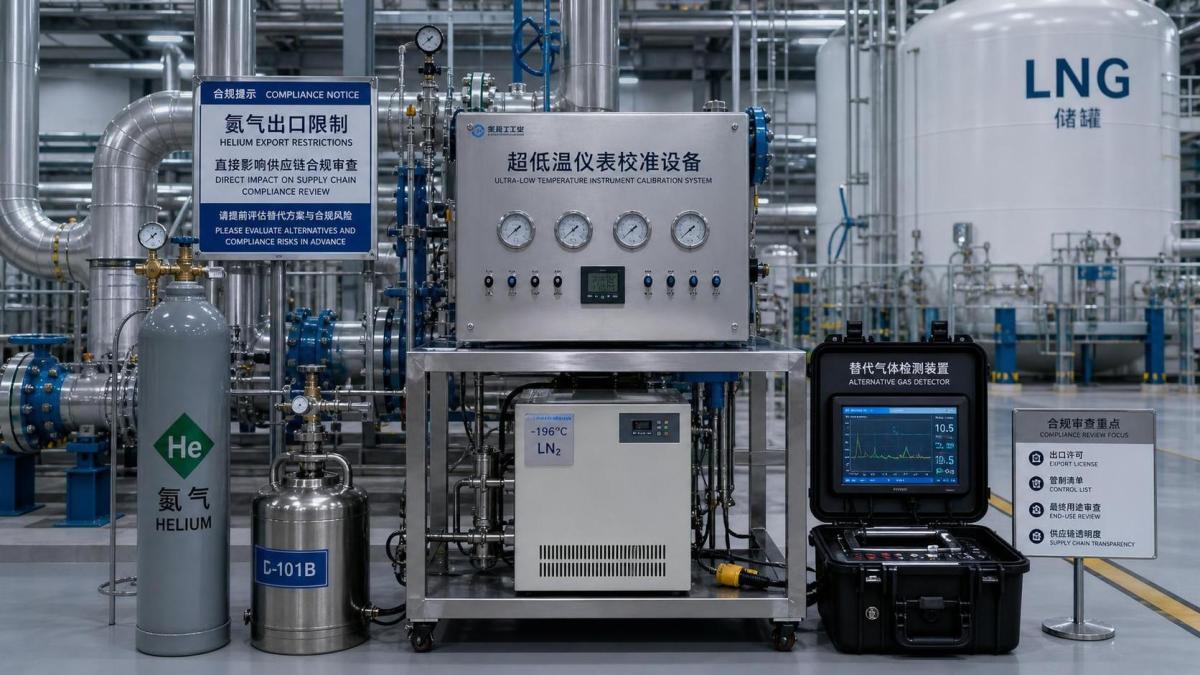
The confirmed information is as follows: on July 10, 2026, China’s Ministry of Commerce and the General Administration of Customs jointly issued an announcement implementing temporary export prohibition management on helium, effective immediately. The affected product is helium under HS code 2804290010. Helium is used in key instrument calibration for ultra-low-temperature LNG receiving terminals, leak testing of SMR cooling systems, and superconducting magnet testing. In these scenarios, it is an irreplaceable medium. Based on currently available information, the measure first affects helium supply arrangements within China that are related to exports, rather than imposing direct restrictions on all downstream projects themselves.
Which Parts of the Chain Will Feel the Pressure First
Cross-Border Procurement and Pre-Commissioning Services Will Be Reassessed First
For overseas energy EPC contractors that previously relied on China-sourced supporting testing services or pre-commissioning consumables, the most direct impact will fall on order arrangements, delivery schedules, and the switching of alternative solutions. Because the restriction targets export management, related business can no longer proceed simply under existing procurement logic. Procurement documents, delivery terms, and shipping routes all need to be reviewed again.
LNG Terminal Calibration and Leak Testing Must Reconfirm Material Sources
For LNG terminal operators, helium is involved in critical procedures such as ultra-low-temperature instrument calibration. Once exports are restricted, the availability of testing gases and related consumables originally sourced from China may decline. The issue is not only whether the gas can still be purchased, but also whether alternative gases can meet established technical requirements and whether the corresponding validation documents will be accepted by project owners or acceptance authorities.
SMR and Superconducting Testing Depend More Heavily on Compliant Alternative Pathways
SMR cooling system leak testing and superconducting magnet testing place high demands on the stability of the test medium. Any alternative solution cannot be assessed solely on price or delivery speed. For nuclear equipment integrators, the more important issues at this stage are compliance validation of alternative gases, traceability of test records, and whether tender documents or technical specifications need to be updated in line with changes to medium requirements.
Items Enterprises Should Review First
Check Documents First, Then Contract Terms
Relevant enterprises should first review whether existing orders are still based on China-sourced helium, and whether shipping documents, trade paperwork, technical descriptions, and contractual delivery terms need to be adjusted. If project documents specify helium as the required medium, companies should confirm as early as possible whether there is room for approval of alternative gases, so as to avoid technical disputes during later acceptance procedures.
Move Alternative Gas Validation Forward to the Procurement Stage
For projects requiring continuous construction or on-site joint commissioning, alternative solutions should not be left until just before delivery. A more prudent approach is to move compliance validation, technical confirmation, and supplier qualification review forward to the procurement stage. At minimum, enterprises should first confirm whether the alternative gas can meet the basic conditions required for leak testing, calibration, or testing procedures.
Reassess Delivery Cycles and Service Boundaries
If the original supply chain includes testing services or pre-commissioning support within China, the export ban may change service boundaries and delivery sequencing. Enterprises should also check whether suppliers can still provide equivalent technical documents, quality traceability materials, and after-sales support, so as to avoid situations where “goods arrive but documents are incomplete” or “equipment arrives on site but testing conditions are not met.”
Is This News More Like an Execution Signal or a Development to Watch?
From an analytical perspective, this information is better understood as an execution signal that has already taken effect, rather than merely a policy rumor. The reason is that the temporary export prohibition management measure has clearly begun implementation. What the market now needs to continue watching is whether more specific implementation standards, documentation requirements, certification interpretations, or industry feedback will emerge. For downstream enterprises, it is not appropriate to treat this as an abstract policy discussion. It should instead be handled as a compliance event that has already entered the operational level.
From an industry perspective, helium is not an ordinary bulk material. It is connected to critical validation activities in LNG, nuclear equipment, and high-end testing processes. As long as these processes still require participation from Chinese supply chains, regulatory changes will quickly transmit into tender documents, procurement lists, and delivery milestones. At present, the more important question is whether relevant parties will update technical specifications and alternative medium requirements accordingly, rather than simply waiting for the market to recover on its own.
A More Prudent Way to Understand the Matter
The most appropriate way to understand this information is to treat it as a trade and compliance change that has already taken effect. Its direct impact is concentrated on helium exports and related downstream procurement chains, rather than serving as a conclusive judgment on the entire LNG or SMR industry. In the short term, enterprises should focus less on debating how large the impact may be, and more on quickly confirming whether their projects involve China-sourced helium and whether alternative solutions can pass both technical and compliance validation.
Sources and Follow-Up Verification
This article has been prepared based on the information title, event date, and event summary provided by the user. Source types typically relevant to this kind of event include official announcements, regulatory releases, customs or trade authority information, industry association updates, standards organization documents, and reporting from authoritative media. Since the input did not provide specific official source links, no external links are listed here. Follow-up verification should continue to focus on policy details, certification implementation interpretations, changes in tender documents, industry feedback, and corporate execution practices.
Related Industries
- What Hydrogen Transport News Reveals About Infrastructure InvestmentDiscover what hydrogen transport news reveals about infrastructure investment. Assess demand, delivery costs, and project risks to identify opportunities worth pursuing.
- Megawatt-Scale PEM Electrolyzer Completes Grid Connection Testing in NorwayMegawatt-scale PEM electrolyzer completes grid connection testing in Norway. Explore reported dynamic-load performance and key checks for green hydrogen procurement.
- How to Choose a Beryllium Copper Rod for Strength and ConductivityChoose the right beryllium copper rod for strength and conductivity. Compare alloy grades, tempers, ASTM standards, and supplier certificates to make a confident purchasing decision.
Weekly Insights
Stay ahead with our curated technology reports delivered every Monday.
Related Industries
Recommended News
- 00
0000-00
When should an LNG import terminal favor flexible regasification capacity?LNG import terminal strategy: learn when flexible regasification capacity protects reliability, manages demand volatility, and improves long-term commercial resilience.By Dr. Marcus CrudeOct 09, 2026 - 00
0000-00
Avoiding late cost overruns in LNG infrastructure and capital projectsLNG infrastructure and capital projects: learn practical strategies to control scope, procurement, change and commissioning risks before late cost overruns escalate.By Dr. Marcus CrudeOct 09, 2026 - 00
0000-00
How to Select a Shell and Tube Heat Exchanger for LNG ServiceShell and tube heat exchanger selection for LNG service: assess cryogenic materials, thermal cycling, pressure drop, and reliability. Read the expert guide.By Dr. Marcus CrudeSep 30, 2026
0000-00
