
Global Energy & Strategic Industrial (G-ESI)
Can Environmental Compliance Issues Delay LNG Project Tender Awards?
Can Environmental Compliance Issues Delay LNG Project Tender Awards?
Can environmental compliance issues delay project tender award timelines in the LNG sector? Yes—depending on jurisdiction and procurement conditions, unresolved environmental impact assessments, emissions requirements, or permitting disputes can postpone award decisions and complicate investment planning. The challenge is identifying which compliance gaps threaten the award schedule and which can be managed through contractual safeguards.
An environmental issue does not need to stop construction legally to delay an award commercially. If it leaves the plant configuration, financing conditions, or contractor responsibilities uncertain, the owner may be unable to compare bids fairly or approve a binding commitment. Understanding that distinction is essential when reviewing an LNG procurement schedule.
The award date is not the same as permission to build
LNG developments involve several decisions that are often compressed into one milestone in management reporting: preferred-bidder selection, contract execution, final investment decision, notice to proceed, and authorization for specific site activities. Environmental obligations can affect each differently.
An owner may select an engineering, procurement, and construction contractor while permits remain outstanding. Depending on applicable law and tender rules, it may also sign a conditional contract or authorize limited engineering. None of those actions necessarily permits dredging, land clearance, piling, or construction of the liquefaction train.
The award itself becomes vulnerable when an approval is a procurement prerequisite, when the unresolved issue could materially change the scope, or when the investment committee will not accept the remaining exposure. A technically compliant bid can therefore remain unawarded even though the contractor has completed its submission.
The useful question is not simply, “Are all permits approved?” It is, “Which outstanding approvals prevent this specific commitment, and what could they still change?”
Where environmental uncertainty enters the tender
An impact assessment can reopen the design basis
An environmental impact assessment may identify requirements affecting terminal layout, marine access, water management, noise controls, habitat protection, or construction methods. These are not always matters that can be resolved by adding a reporting obligation to the contract.
For example, a proposed dredging method may require further sediment assessment, while an intake or discharge arrangement may need additional environmental modeling. If the resulting conditions change equipment selection or civil quantities, bidders are pricing different versions of the project unless the owner updates the tender basis. Requests for clarification, revised bids, and additional evaluation can then push back the award.
Seasonal ecological surveys deserve particular attention. Where a regulator requires observations during a specific period, an incomplete baseline cannot necessarily be corrected by assigning more personnel. Procurement schedules should recognize that dependency rather than treating every assessment task as compressible.
Emissions requirements can change equipment and utility choices
Liquefaction projects must establish a credible emissions basis for the proposed configuration. Relevant inputs can include turbine operating profiles, fuel composition, flaring assumptions, methane sources, and the performance of emissions-control systems. The applicable obligations depend on the jurisdiction and permit conditions.
If compliance requires a different driver arrangement, additional controls, or revised power infrastructure, the consequences extend beyond equipment price. Electrical supply, plot space, cooling requirements, commissioning procedures, and long-lead procurement may all need reconsideration. Electrification is not automatically a simpler permitting route; grid availability and upstream power arrangements must also be assessed.
Export liquefaction plants and LNG import or regasification terminals also have different environmental profiles. Import terminals may place greater emphasis on marine works and, depending on technology, seawater intake and discharge. Applying a generic “LNG compliance checklist” without identifying the facility type can miss the actual award constraint.
Consultation and legal challenges introduce a different uncertainty
Community consultation, land-access questions, fisheries concerns, and challenges to environmental decisions can affect the project schedule. However, a complaint or pending challenge should not automatically be described as a legal prohibition. Whether it restricts activity depends on the governing process, any court order, and the approval involved.
Even without a formal restriction, an owner or lender may pause a commitment if the dispute exposes weaknesses in consultation or assessment. The commercial delay is real, but its cause differs from a statutory bar. That difference matters when allocating risk and deciding whether a conditional award remains defensible.
Follow the dependency chain, not just the permit register
A permit register records applications and approvals. An award-readiness review must go further by connecting each unresolved condition to the technical scope, bid price, investment approval, and authorized work. Without those links, a project can report substantial permitting progress while its most consequential dependency remains open.
The sequence to examine is straightforward: outstanding environmental requirement, potential design consequence, commercial exposure, and affected decision gate. For instance, uncertainty over a marine construction window may leave equipment specifications unchanged but alter mobilization, vessel availability, and the achievable completion date.
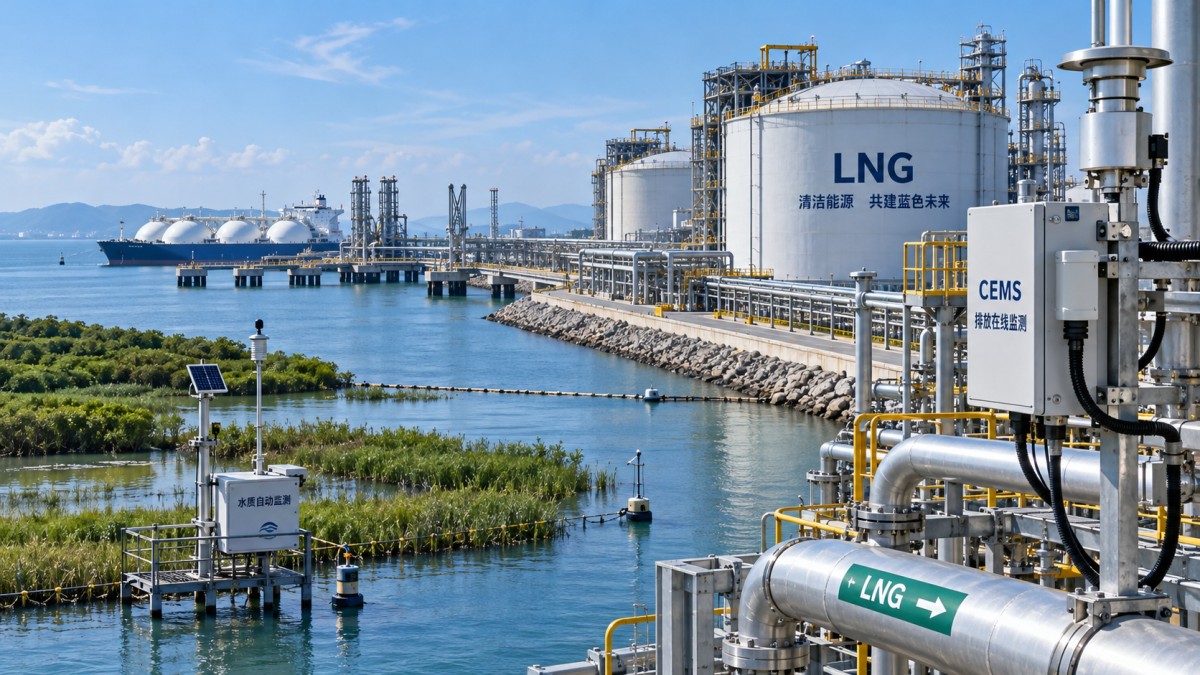
Different jurisdictions organize these dependencies differently. In the United States, certain onshore LNG facilities fall within Federal Energy Regulatory Commission authorization processes, while other federal and state approvals may also apply. In the European Union, relevant projects may face environmental impact assessment requirements alongside national permitting and, where applicable, protected-site assessments. Neither framework supports a universal claim that one approval clears every construction activity.
The review boundary also matters. An approved terminal does not necessarily resolve environmental questions concerning an associated pipeline, transmission connection, access road, or disposal site. Those interfaces can affect operational readiness even when they sit outside the principal EPC package.
What to check before accepting an award forecast
A forecast deserves scrutiny when its supporting documents contain unresolved assumptions rather than agreed conditions. The following checks help distinguish a manageable administrative item from a potential award blocker:
- Design consistency: Does the environmental submission describe the same capacity, equipment configuration, operating modes, and marine works as the tender?
- Evidence completeness: Are required baseline studies and regulator-requested responses complete, or does the schedule assume they will be accepted without further review?
- Scope ownership: Is responsibility clear for mitigation measures, monitoring equipment, permit amendments, and environmental management during construction?
- Bid qualifications: Have bidders excluded compliance costs or assumed approval dates that differ from the owner’s schedule?
- Financing conditions: Are lender environmental and social requirements documented separately from statutory approvals?
- Schedule logic: Does the award forecast reflect consultation periods, possible redesign, and approval-dependent activities rather than only target application dates?
The strongest evidence is not a percentage-complete dashboard. It is a traceable set of approval documents, current regulator correspondence, design revisions, and named responsibilities. Where an approval date remains uncertain, the forecast should show that uncertainty rather than conceal it inside a single promised milestone.
Conditional awards help only when the remaining risk is bounded
Waiting for every environmental matter to close may unnecessarily delay engineering or procurement. A conditional award can be appropriate when permitted early activities are clearly defined and the unresolved requirements are unlikely to overturn the fundamental design. It is less convincing when the plant configuration, site acceptability, or major infrastructure route remains uncertain.
The contract should distinguish the scope authorized at signature from the scope released at notice to proceed. Conditions precedent should identify the required approvals and evidence, not merely state that “all environmental matters” must be satisfactory. A long-stop date, suspension provisions, termination rights, and payment treatment for authorized work help prevent an indefinite commitment.
Change mechanisms also need attention. A regulator-driven design modification should have an agreed route for assessing price and schedule effects. Conversely, a contractor should not receive automatic relief for failing to meet a requirement already included in the tender baseline. The distinction between an existing obligation and a later change must be explicit.
Early orders for long-lead equipment deserve a separate review. Before release, confirm whether pending conditions could alter the equipment specification and establish cancellation, storage, and modification exposure. Ordering early can preserve delivery options, but it can also convert regulatory uncertainty into sunk cost.
Technical benchmarking supports diligence; it does not replace approval
Equipment conformity and project environmental acceptability are different questions. Relevant API, ISO, ASTM, or ASME standards can support specification review, materials selection, quality assurance, and mechanical integrity. They do not, by themselves, demonstrate that an LNG development meets its site-specific environmental obligations.
This distinction fits the intelligence role of Global Energy & Strategic Industrial (G-ESI): connecting technical benchmarking with regulatory foresight and procurement analysis. For LNG diligence, the useful output is a traceable comparison between the equipment offered, the environmental assumptions used in the tender, and the conditions that could affect award or delivery.
Cross-sector insight is useful at those interfaces. Changes to power supply, industrial controls, or material specifications can create dependencies outside the main liquefaction package. Those connections should inform the review, without substituting broad industry benchmarks for project-specific evidence.
Make the award decision against a defined environmental baseline
Before committing, separate unresolved matters into three categories: those that prevent award under applicable rules, those that could materially change scope or financing, and those that can be managed after award within a defined obligation. Each category requires a different response.
A credible award date rests on that separation. If a major environmental condition still lacks an owner, an evidence requirement, or a contractual consequence, the schedule is not yet reliable. Resolve that gap—or make the commitment expressly conditional—before presenting the tender as ready for award.
Related Industries
- How much does a 500 ton grain silo cost to purchase and install?Planning a 500 ton grain silo? Explore purchase and installation cost factors, uncover hidden expenses, and learn how to compare quotes for a reliable project budget.
- DOE Authorizes Strategic Petroleum Reserve Exchange to Support Fuel SupplyExplore the reported DOE Strategic Petroleum Reserve exchange of up to 4 million barrels, its fuel supply goals, and repayment obligations for crude buyers and refiners.
- How to Choose Offshore Cables for Wind Farm Projects in EuropeChoose the offshore cable Europe’s wind farms need. Learn how to compare ratings, seabed conditions, installation limits and supplier evidence to reduce project risk.
Weekly Insights
Stay ahead with our curated technology reports delivered every Monday.
Related Industries
Recommended News
- 00
0000-00
Cheniere and QatarEnergy Sign LNG Supply Agreement Through 2054Cheniere and QatarEnergy’s LNG supply agreement runs through 2054. Explore the 4 million-tonne annual deal and why half depends on a final investment decision for the Sabine Pass expansion.By Dr. Marcus CrudeOct 23, 2026 - 00
0000-00
Which EPA Regulations Apply to Methane Emissions at LNG Facilities?Which EPA Regulations apply to methane emissions at LNG facilities? Explore reporting rules, permit requirements, and equipment standards to clarify your compliance obligations.By Dr. Marcus CrudeOct 16, 2026 - 00
0000-00
Can Environmental Compliance Issues Delay LNG Project Tender Awards?Can environmental compliance issues delay project tender award timelines? Explore LNG permitting risks, design impacts, and conditional award strategies to protect your procurement schedule.By Dr. Marcus CrudeOct 13, 2026
0000-00
