Global Energy & Strategic Industrial (G-ESI)
Which SMR components require nuclear-grade quality assurance?
Which SMR components require nuclear-grade quality assurance?
SMR components require nuclear-grade quality assurance when their credited safety functions, classification, and applicable licensing requirements call for it—not simply because they sit inside a nuclear facility. Reactor pressure boundaries, shutdown equipment, and safety-related instrumentation are common priorities. Supporting systems, structural connections, and software can fall within the same controlled scope.
The difficult part is establishing the boundary. A valve serving an ordinary utility system may need conventional industrial QA, while a similar-looking valve credited for isolation may require nuclear QA controls. For quality and safety teams, the practical task is to connect every relevant equipment tag to a documented safety function, procurement specification, and acceptance record.
“Nuclear-grade” is not a universal product designation
The phrase is useful shorthand, but it is not a single international certification. Three separate questions determine what a supplier must deliver: what safety function the item performs, which technical construction or qualification rules apply, and which QA requirements govern the work.
In the United States, 10 CFR Part 50, Appendix B establishes QA criteria for activities affecting the safety-related functions of covered structures, systems, and components. ASME NQA-1 provides nuclear QA program requirements, with the applicable edition and commitments established through the project’s regulatory and contractual framework. These references should not be treated as interchangeable product certificates.
ASME Boiler and Pressure Vessel Code Section III addresses construction rules for nuclear facility components within its scope. It does not, by itself, define the QA treatment of every sensor, software package, or electrical assembly. Likewise, ISO 19443 addresses quality management within the nuclear energy supply chain for organizations supplying products and services important to nuclear safety; certification does not automatically establish acceptance under a particular licensing basis.
Outside the United States, classification terminology, accepted codes, and supplier oversight arrangements differ. A specification must identify the jurisdiction, applicable editions, regulatory commitments, and project-specific requirements rather than simply request “nuclear-grade quality.”
Where the controlled scope usually starts
Pressure boundaries and barriers to radioactive release
For water-cooled SMRs, reactor vessels, primary pressure-retaining piping, associated valves, and relevant heat-exchanger pressure boundaries are obvious candidates for stringent controls. Containment structures, isolation devices, penetrations, and seals also require assessment against their credited confinement functions.
The boundary is design-dependent. An integral reactor may place major equipment inside the vessel, reducing external primary piping without removing the need to control internal supports, connections, welds, and inspection access. Gas-cooled and molten-salt designs have different pressure, temperature, materials, and radionuclide-retention considerations. A light-water reactor equipment list cannot simply be transferred to them.
For pressure-retaining items, acceptance commonly depends on material identity, approved fabrication procedures, welding qualifications, nondestructive examination, heat-treatment records, and specified testing. A final pressure test cannot substitute for missing manufacturing evidence.
Shutdown, heat removal, and their supporting equipment
Control rod drives, shutdown mechanisms, and other credited reactivity-control equipment need QA appropriate to their assigned functions. The same principle applies to decay-heat removal systems, whether they use active machinery or passive circulation.
Passive does not mean exempt. A gravity-fed tank, natural-circulation heat exchanger, check valve, or air-flow path may be essential to a credited safety function. Geometry, elevation, flow resistance, cleanliness, and installation tolerances can therefore become acceptance characteristics rather than ordinary construction details.
Supporting services must be traced as well. Electrical supplies, cooling, ventilation, instrument air, or structural supports may require controlled treatment when their failure could prevent safety equipment from functioning. The correct scope follows the functional dependency, not the equipment’s apparent complexity.
Protection instrumentation, electrical equipment, and software
Reactor protection sensors, trip logic, actuation circuits, and credited monitoring channels are common nuclear QA priorities. Depending on the design, batteries, switchgear, cables, connectors, and cable supports can also be within the safety-related scope.
A calibration certificate alone does not establish suitability. Acceptance may require evidence of environmental and seismic qualification, response time, accuracy under specified conditions, electrical isolation, and failure behavior. Digital systems add software lifecycle controls, verification and validation, configuration identification, and assessment of common-cause failure.
A replacement controller with the same commercial model number may contain different firmware or internal components. That change needs evaluation before installation; physical interchangeability is not proof of functional equivalence.
Fuel, core structures, and mechanical interfaces
Fuel manufacturing and acceptance require dedicated controls under the applicable fuel design and licensing arrangements. Core supports, restraint mechanisms, and other internals may also have safety functions involving geometry, cooling capability, or structural integrity.
Small interfaces deserve particular attention: anchor bolts, embedded plates, support welds, and module-to-module connections. A qualified assembly cannot perform its intended function if its anchorage or site connection is inadequate. Factory completion therefore does not eliminate the need for controlled site installation and verification.
How to verify the QA boundary
Start with the approved or controlled design basis and safety classification documentation, not a supplier catalogue. Build a traceable chain from the safety analysis to the system function, component tag, procurement requirement, and acceptance evidence. Where classification is still evolving, identify the unresolved decision explicitly before manufacturing commitments become difficult to reverse.
A useful boundary review follows this sequence: credited safety function → required equipment and dependencies → applicable classification → technical and QA requirements → objective evidence of conformity.
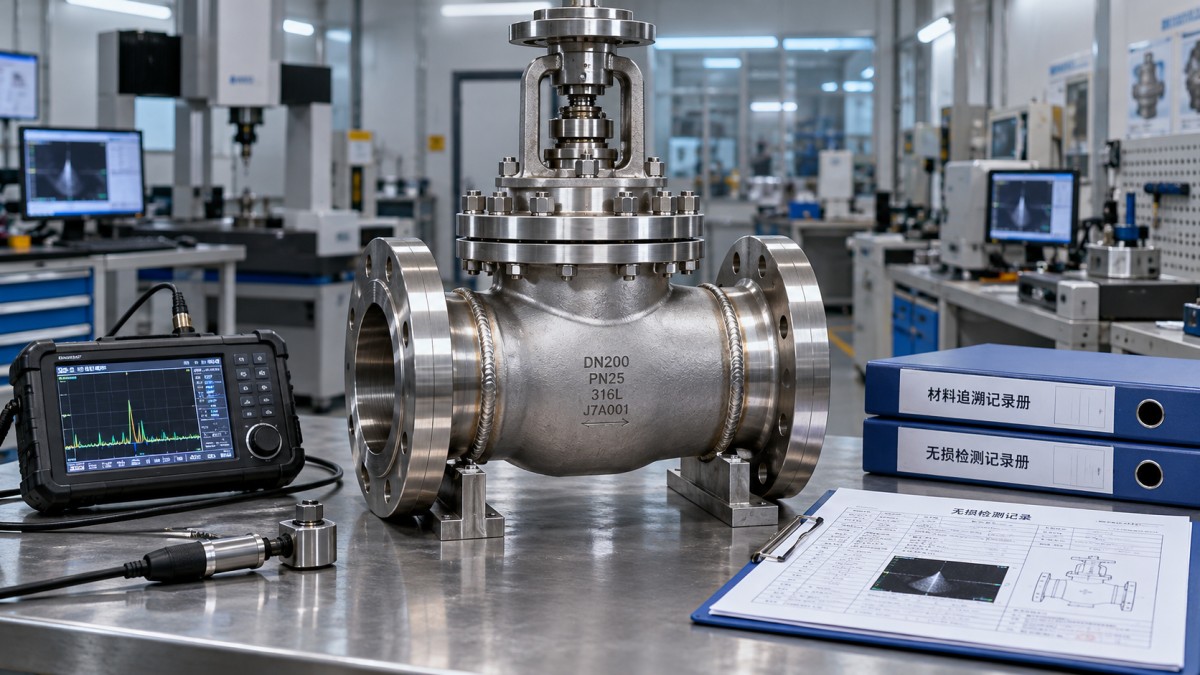
For each item, the classification register should identify the responsible design authority, applicable code or standard, required qualification conditions, and evidence needed for release. It should also distinguish safety classification from pressure-boundary code class, seismic category, and electrical qualification requirements. These attributes interact, but they are not identical.
Do not assume that everything outside a safety-related designation needs only routine commercial controls. Some licensing approaches assign special treatment to other safety-significant equipment. Conversely, ordinary balance-of-plant equipment does not automatically require full nuclear QA. Assess whether its failure could flood, strike, overheat, or otherwise impair credited equipment before closing the review.
What supplier qualification must actually establish
Supplier approval should match the work being purchased. Capability to machine industrial steel does not demonstrate capability to control nuclear material traceability, special processes, design changes, or nonconforming conditions. An audit must examine the relevant facility, activities, and subcontracted processes—not merely the corporate quality manual.
- Requirement flow-down: Do purchase orders carry the applicable technical requirements, QA clauses, access rights, record obligations, and change-notification conditions to sub-tier suppliers?
- Process control: Are welding, heat treatment, examination, and other processes performed using qualified procedures and personnel where required?
- Traceability: Can material identity be followed through cutting, machining, assembly, marking transfer, and final documentation?
- Nonconformance control: Who can approve repair or use-as-is dispositions, and when must the purchaser or design authority become involved?
- Configuration control: Are drawings, bills of material, firmware, and manufacturing revisions tied to the delivered serial number?
Commercial-grade dedication can be appropriate for eligible items under an applicable regulatory framework. It requires identification and verification of critical characteristics that provide reasonable assurance the item will perform its intended safety function. It is not simply retrospective approval of an ordinary purchase, nor does it automatically replace applicable construction-code requirements.
Records that reveal gaps before delivery
The best time to agree the manufacturing record package is before production. Define inspection and test plans, hold points, witness points, document review stages, and release criteria early enough for missing evidence to be prevented rather than reconstructed.
For a pressure component, the package may include material certificates, traceability maps, weld records, examination reports, heat-treatment charts, dimensional results, and pressure-test records. For a protection channel, relevant evidence may instead center on qualification reports, calibration, software verification, configuration baselines, and functional testing.
Check that records identify the actual item and revision delivered. Frequent warning signs include certificates disconnected from heat numbers, test reports covering an earlier design, unresolved concessions, and qualification evidence that excludes an installed connector or mounting arrangement.
Factory modularization makes this especially important for SMR components. Shipping a sealed module can make later inspection difficult. Release should therefore depend on completion of defined acceptance activities and disposition of outstanding conditions, with preservation, transport, receipt inspection, and site testing addressed separately.
Use benchmarking to expose differences, not erase them
Cross-industry manufacturing experience is valuable, particularly in specialty steel, precision fabrication, and industrial controls. But compliance with an API specification, an ASTM material standard, or a conventional ISO quality system does not establish nuclear suitability by itself.
For a technical intelligence hub such as Global Energy & Strategic Industrial (G-ESI), useful benchmarking means making those boundaries visible: separating material properties from construction compliance, supplier capability from project qualification, and certificate availability from traceable acceptance evidence. That distinction supports procurement decisions without replacing the licensee’s or design authority’s responsibilities.
Before releasing an SMR purchase package, ask whether every credited function has a corresponding set of controlled requirements—and whether every requirement has an identified acceptance method. If either link is missing, the QA boundary is not yet sufficiently defined for that scope of work.
Related Industries
- Which Safety Standards Apply to Autonomous Harvesters in the Field?Explore autonomous harvester safety standards, including ISO 18497, ISO 25119, and ISO 4254. Learn what evidence to demand before approving safe field operations.
- China’s September Rare Earth Exports Remain Well Below Pre-Control Levels: ReportChina’s September 2026 rare earth exports stayed below pre-control levels despite rising U.S. shipments. Explore what the trend could mean for supply chains and procurement.
- What Should You Check Before Buying Bucket Elevators Wholesale?Buying bucket elevators wholesale? Check capacity, material compatibility, safety, supplier quality, and total costs. Explore this checklist to avoid costly mistakes and buy with confidence.
Weekly Insights
Stay ahead with our curated technology reports delivered every Monday.
Related Industries
Recommended News
- 00
0000-00
Which SMR components require nuclear-grade quality assurance?Which smr components need nuclear-grade QA? Explore safety classifications, supplier controls, and acceptance records to reduce procurement risks and make informed decisions.By Dr. Julian VoltOct 26, 2026 - 00
0000-00
How Do SMR Components Work Together to Generate Nuclear Power?Discover how SMR components work together to turn nuclear heat into electricity. Explore reactor cores, cooling loops, turbines, and safety systems in this clear, practical guide.By Dr. Julian VoltOct 22, 2026 - 00
0000-00
How to Set Reactor Shutdown Safety Metrics for Reliable SMR OperationsReactor shutdown safety metrics for reliable SMR operations: learn how to measure trip response, shutdown margin, decay heat removal, and auditable safety performance.By Dr. Julian VoltOct 12, 2026
0000-00
