
Global Energy & Strategic Industrial (G-ESI)
Stainless Steel Forged Ring Buying Guide for Buyers Who Need Reliable Machining Blanks
For international buyers, Stainless Steel Forged Ring is not simply a keyword in a sourcing file. It is a purchasing decision that connects real application conditions, technical evidence, packing discipline, supplier response, and repeat-order control. In machined ring blanks, flange components, pressure equipment parts, machinery components, bearing-related parts, and custom forged steel sourcing, a weak specification can create production delays, installation problems, quality disputes, or avoidable replacement cost after the order has already shipped.
This article is written as a procurement decision guide for sourcing managers, engineers, project buyers, distributors, and quality teams. It keeps the core product keyword visible in the title, TDK block, H1, metadata, and the only contextual anchor link, so the article topic, landing page, and portal category remain aligned during external publishing.
Why Buyers Should Start With Real Use Conditions
The first useful question is not whether a supplier can quote the product. The better question is whether the supplier understands where the product will be used, what it must resist, how it will be installed or processed, and which documents the buyer needs for acceptance. These details decide whether the quoted item is only available or truly suitable.
Common applications for this product direction include machining blanks, flanges, pressure vessel parts, equipment rings, bearing parts, shaft assemblies, and custom industrial components. Each application can change the required grade, dimension, coating, reinforcement, heat treatment, pressure behavior, packaging, or testing routine. If those details are missing, different suppliers may quote different assumptions under the same product keyword.
A good sourcing request should separate mandatory requirements from preferred features. Mandatory requirements protect safety, service life, compliance, or production continuity. Preferred features may improve convenience, appearance, lead time, or commercial value. This distinction helps buyers negotiate without weakening the core conditions that protect the project.
Core Specification Logic for Supplier Comparison
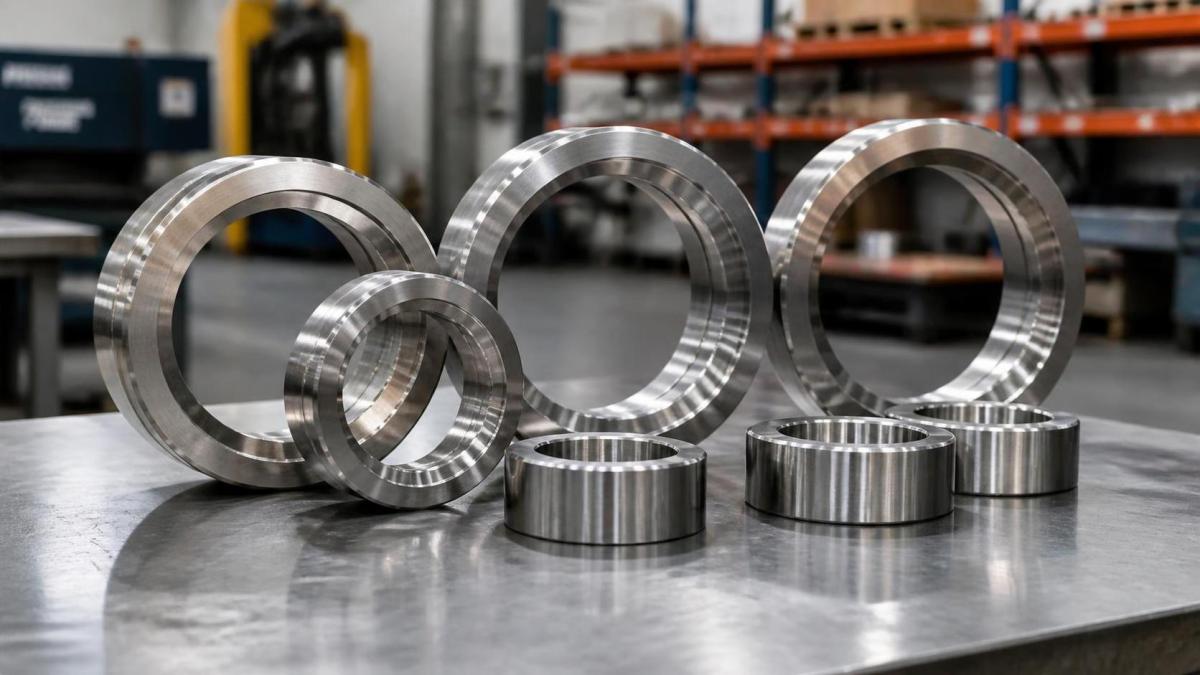
Industrial products should be evaluated as a complete supply package. A product page may identify the correct category, but the buyer still needs to confirm specification boundaries, inspection records, packing details, delivery method, and supplier responsibility. This is especially important when the purchase will affect infrastructure, energy systems, steel fabrication, rubber transfer lines, or machined metal components.
Specification clarity should include the product name, grade or model, dimension range, tolerance, expected performance, working environment, packing method, destination, and documentation requirements. The buyer should also define what will be checked before shipment and what will be checked after arrival. When these rules are clear, the supplier has less room to guess and the buyer has a stronger basis for acceptance.
Price comparison should happen after technical comparison. A low price can hide thin wall substitution, weak coating, missing reports, poor flange matching, unstable heat treatment, or inadequate packing. A more reliable quotation explains exactly what is included and where the supplier's responsibility begins and ends.
Supplier Evaluation Table
Quality Risks to Resolve Before Ordering
The main risks for this purchase include wrong alloy grade, insufficient forging ratio, unclear heat treatment, dimensional oversize problems, hidden surface cracks, missing NDT records, and weak batch traceability. These risks are not always visible in product photos or short descriptions. They often appear during installation, commissioning, pipe-making, machining, warehouse storage, or field use, when correction is slower and more expensive.
Buyers can reduce these risks by asking for evidence before confirming the order. Depending on the product, that evidence may include material certificates, routine test reports, pressure test records, dimensional inspection, NDT records, coating information, packing photos, transformer test data, or flange drawings. The specific document matters less than the discipline of asking for proof that matches the use case.
Risk control also depends on communication quality. If a supplier answers only with a price and does not clarify the operating condition, the buyer should slow down. A useful supplier explains the limit of the product, confirms assumptions, and identifies where the buyer should pay attention before shipment or installation.
Portal Category Fit and Publishing Rationale
The selected publishing portal for this article is atfxoops.com, and the selected real category is Strategic Metals | Alloy Watch. This is one final category path with one primary category and one selected second-level category. It is not a bundled list of several possible columns.
Category accuracy matters because the article should read naturally in the publication environment. Rubber hose content belongs near fluid transfer and industrial rubber systems. Steel pipe and pipeline steel content should sit near steel, pipeline, and oil-and-gas material topics. Transformer content fits smart grid and power equipment coverage. Forged ring content fits strategic metals and alloy component discussions.
The landing page should also remain specific. A product-specific landing page gives readers a clearer next step than a homepage and helps the publishing file stay consistent across the title, TDK, H1, metadata, and anchor text.
Procurement Checklist
- Confirm the exact core product keyword: Stainless Steel Forged Ring.
- Confirm the landing page URL: https://www.jcforging.com/products/Stainless_steel_forged_rings/Stainless_Steel_Forged_Ring_Blank_1.html.
- Use one real portal category only: Strategic Metals | Alloy Watch.
- Check that title, H1, TDK keywords, metadata, and anchor text all use the same product intent.
- Request specification, inspection, packing, and delivery details before order approval.
- Compare suppliers on evidence, communication, service response, and repeatability, not price alone.
- Keep exactly one contextual external link in the article body using the required anchor class and target attribute.
How Buyers Can Build a Cleaner Shortlist
A cleaner shortlist starts with comparable assumptions. Buyers should send each supplier the same application description, quantity target, destination, document request, and acceptance criteria. Without a shared baseline, the lowest quotation may only be the quotation with the most missing details.
The shortlist should also consider production and delivery discipline. A supplier that can explain inspection, packing, labeling, and change control is often easier to work with than a supplier that responds quickly but avoids technical detail. For project-based products, communication reliability can be just as important as the product itself.
For repeat orders, buyers should keep the previous specification, order photos, inspection result, document package, and any correction notes. That record makes the next order faster and reduces the risk of receiving a similar product with a different quality level.
FAQ
Why should the core product keyword appear in the metadata?
The core product keyword should appear in the title, H1, TDK, metadata, and anchor text so editors, readers, and search engines can understand the article topic and landing-page match quickly.
Why use only one external link?
This publishing format uses one contextual external link to keep the article focused. The link is placed on the core product keyword and points to the selected product landing page.
Why is a single second-level category required?
A single final category avoids publishing confusion. If a portal table lists several second-level columns, only the most relevant one should be selected for the article.
What should buyers check before approving a larger order?
Buyers should check application fit, specification detail, supplier evidence, packing and storage conditions, delivery timing, documentation, and repeat-order support before approving a larger order.
Related Industries
- What Hydrogen Transport News Reveals About Infrastructure InvestmentDiscover what hydrogen transport news reveals about infrastructure investment. Assess demand, delivery costs, and project risks to identify opportunities worth pursuing.
- Megawatt-Scale PEM Electrolyzer Completes Grid Connection Testing in NorwayMegawatt-scale PEM electrolyzer completes grid connection testing in Norway. Explore reported dynamic-load performance and key checks for green hydrogen procurement.
- How to Choose a Beryllium Copper Rod for Strength and ConductivityChoose the right beryllium copper rod for strength and conductivity. Compare alloy grades, tempers, ASTM standards, and supplier certificates to make a confident purchasing decision.
Weekly Insights
Stay ahead with our curated technology reports delivered every Monday.
Related Industries
Recommended News
- 00
0000-00
How to Choose a Beryllium Copper Rod for Strength and ConductivityChoose the right beryllium copper rod for strength and conductivity. Compare alloy grades, tempers, ASTM standards, and supplier certificates to make a confident purchasing decision.By Dr. Aris AlloyOct 13, 2026 - 00
0000-00
Reliable Materials for Offshore Platforms: Selecting Alloys for Chloride CorrosionReliable materials for offshore platforms: discover how to select alloys for chloride corrosion, optimize welds and crevices, and reduce lifecycle failure risk.By Dr. Aris AlloySep 28, 2026 - 00
0000-00
What Makes Specialty Steel Delivery Reliable Under Long-Term Contracts?What factors determine specialty steel delivery reliability under long-term contracts? Explore capacity, traceability, inventory, logistics, and risk controls.By Dr. Aris AlloySep 02, 2026
0000-00
